 Skip-the-line available
What happens at SHIBUYA SKY when the weather turns
The open roof closes for wind, rain, snow, thunder, smog and extreme heat. The indoor Sky Gallery stays open. How to plan around it.
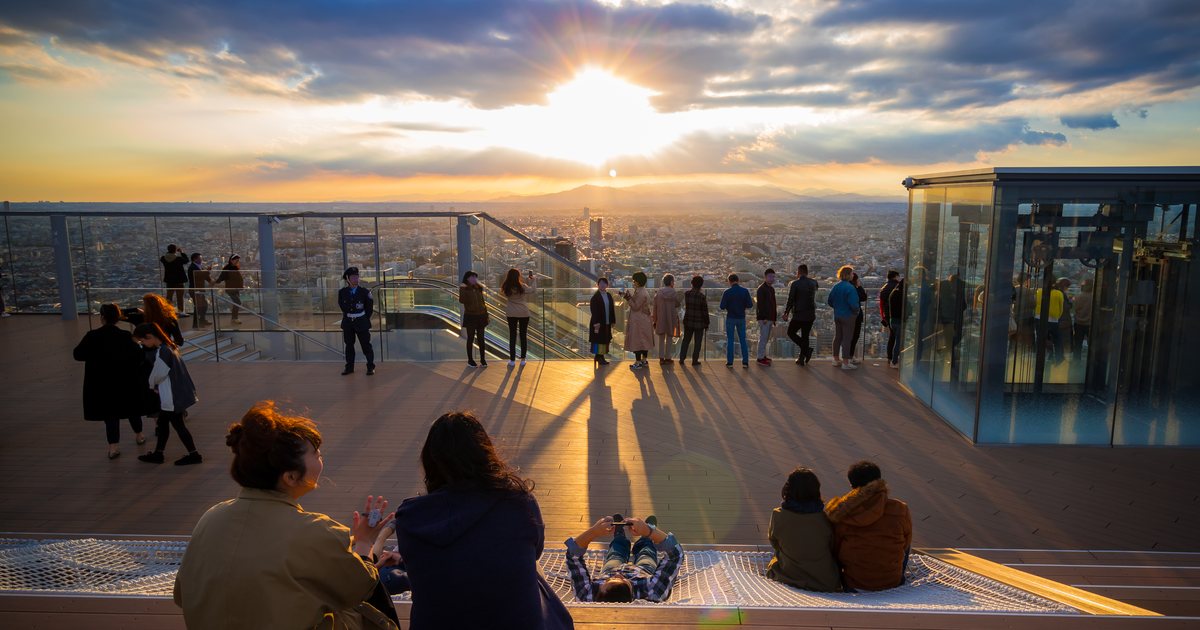
SHIBUYA SKY's open roof is what makes it different from every other deck in Tokyo, and it is also its weak point. In bad weather the roof closes, sometimes for an hour, sometimes for the day, and sometimes while you are up there. This guide explains what closes it, what stays open, how to check before you go and how to plan so a closure costs you as little as possible.
What closes the roof
The deck lists the conditions itself: strong wind, rain, snow, approaching thunderclouds, photochemical smog and abnormally high temperatures. Any one of them can close the Sky Stage, and the deck says it may do so without notice, because weather at 229 metres changes faster than at street level.
Wind is the most common reason. A breezy day in the streets can be a gale on an open roof, and the rules about hats and bags exist because of it. Rain closes the roof because the deck surfaces get slippery. Thunder closes it because the roof is the highest point for some distance.
Photochemical smog warnings are issued by the Tokyo authorities on some hot, still summer days. Extreme heat closes the roof in midsummer, when the deck surface and the glass absorb the sun with no shade.
What stays open
When the roof closes, the rest of SHIBUYA SKY carries on. You still enter at the 14th floor, ride up through the Sky Gate and walk into the Sky Gallery on the 46th floor, a corridor of floor-to-ceiling glass that looks out across the same city.
The view through glass is not the open-air feeling the roof gives, and on a rainy day it is softer. But Shibuya is still below you, the Shinjuku towers are still to the north, and the lights still come on at dusk. Paradise Lounge, the cafe and bar, and the souvenir shop are on the same floor.
A closure can also be temporary. A passing shower or a gusty hour can close the roof and then it reopens. There is no time limit inside, so if the roof is shut when you arrive, waiting in the lounge is a fair bet on a changeable day.
What the deck does and does not offer
The deck is direct about this: once you have entered, it gives no refunds and no discounts if the roof is closed, or if it closes while you are there. Entry is to SHIBUYA SKY as a whole, and the gallery stays open.
Your booking with us follows the terms you accept when you book. If the forecast for your date worries you, write to us before your window: we will tell you what the deck is reporting and what, if anything, can be done.
What we cannot do is control the weather, or the deck's decision to close the roof. Both are outside anyone's hands but the deck's staff on the day.
How to check the roof before you go
The deck posts the roof's status on its official website, where the top of the home page shows whether the rooftop and the indoor areas are open, and on its official X account, which it updates through the day.
Check twice: on the morning of your visit, to see whether the day looks settled, and again before you set off, because conditions change. If the roof is closed for wind an hour before your window, it may well reopen; if a band of rain is set in for the evening, it probably will not.
A weather app with a wind forecast helps. Sustained strong winds and thunderstorms are the conditions most likely to keep the roof shut for long stretches.
Weather through the year
Tokyo's rainy season, tsuyu, usually runs from early June into July, with many grey, wet days. Late summer and early autumn bring typhoons, which can close the roof for a day or more, and thunderstorms on hot afternoons.
Midsummer, in July and August, is hot and humid, and heat is the condition most likely to close the roof in the middle of the day. Evening windows are cooler.
Winter, from December to February, is the driest and clearest time of year, which is why it is the best season for long views and Mount Fuji. It is also cold and can be windy, and the occasional snowfall closes the roof. Spring and autumn are milder but changeable.
How to plan around the weather
If your time in Tokyo allows it, keep the SHIBUYA SKY day flexible until the two-week sale window opens, then look at the long-range forecast before you choose a date. A settled spell of high pressure is your friend.
Choose a window with room around it. Because there is no time limit inside, an earlier window gives you more chance to wait out a short closure than a late one; a sunset window that starts 40 to 60 minutes ahead of the sun gives some slack.
Keep a wet-weather plan for the rest of the day. Shibuya is full of indoor things to do, and the station's own buildings, Shibuya Scramble Square, Hikarie, Stream and Fukuras, are connected to it, so you can spend a rainy afternoon nearby and still be close to the entrance.
Summer heat on the roof
The roof is a broad open deck with no shade. On a hot July or August afternoon, the sun is strong and the surfaces store heat, which is why abnormal heat is on the deck's list of reasons to close the roof.
If you are visiting in midsummer, an evening window is kinder: the sun is lower, the air is cooler, and the sunset itself comes late, around 18:30 to 19:00. Bring water to drink before you go up, since drinks cannot be carried onto the roof, and use sunscreen. Hats are not allowed, so sunglasses are your best shade.
Photochemical smog warnings are another summer factor. They are issued on hot, still days, and the deck closes the roof while they are in force.
Wind and the winter roof
Winter is the clearest season for the view and the windiest for the roof. A cold winter wind can close it for spells, and when it is open, the wind chill at 229 metres is sharp. Dress warmly: gloves, a scarf tucked in and a proper coat. Hats and beanies are not allowed on the roof, so a hood is the way to keep your head warm.
The reward is the view. On a clear winter day the air is dry, the haze of summer has gone, and Mount Fuji often stands out to the west. Sunsets come early, between about 16:30 and 17:20 from December to February.
Snow is rare in Tokyo but not unknown; when it falls, the roof closes.
A rainy day in Shibuya
If the roof is closed for the day, the indoor deck still gives you the height. The Sky Gallery's windows run from floor to ceiling, and on a rainy evening the lights of the city below spread across the wet streets in a way a clear night does not show.
Shibuya also has plenty under cover. The station's connected buildings, Shibuya Scramble Square, Shibuya Hikarie, Shibuya Stream and Shibuya Fukuras, hold shops, restaurants and cafes, and you can walk between several of them without going outside.
If rain is set in for the evening of your visit and you would rather not spend it indoors, write to us before your window. We will tell you what the deck is reporting and what your options are.
Choosing a window with the weather in mind
Because there is no time limit inside, the length of time between your window and closing is your buffer. A window at 16:00 leaves six and a half hours for a closure to pass; the last window at 21:00 leaves an hour and a half. If the forecast is changeable, an earlier window gives you more chances.
For a sunset visit, the window 40 to 60 minutes before the sun goes down is still the right choice. It leaves time to wait in the lounge on 46 if a shower closes the roof, and the deck stays open after dark if the roof reopens late.
Remember that tickets cannot be moved to another date or time once issued. Choose your date with the forecast in mind once the two-week sale window opens.
If it turns while you are on the roof
Follow the staff. When the weather changes suddenly, they clear the roof and direct everyone back down to the 46th floor, and the deck asks visitors to follow their instructions in any emergency.
Keep everything you have on the roof secure. Your phone is the most likely thing to fly out of a hand in a gust, so keep a firm grip near the edge, and do not lean out over the glass.
Once you are back on 46, the gallery and the lounge are still open, and you can stay as long as you like.
Cloud, haze and the night view
Cloud on its own does not close the roof. A grey day may hide the sunset, but the night view still works, and the lights of the city reflect on low cloud in a way a clear night does not show.
Haze is the more common disappointment, especially from late spring to early autumn, when the far views to Mount Fuji, Tokyo Skytree and the edges of the city fade. The nearer landmarks, Shinjuku, Yoyogi, Tokyo Tower, usually stay visible.
If a clear view is the main point of your visit, the colder months give you the best odds, and a morning or midday window can be clearer than late afternoon.
Frequently asked
Does SHIBUYA SKY close in the rain?
The open roof does. The indoor Sky Gallery on the 46th floor stays open, with the view through floor-to-ceiling glass.
What weather closes the roof?
Strong wind, rain, snow, approaching thunder, photochemical smog and extreme heat, according to the deck.
Do I get a refund if the roof is closed?
The deck gives no refunds or discounts after entry. Write to us before your window if the forecast worries you, and we will tell you what the deck is reporting.
How do I know if the roof is open?
Check the deck's official website or its X account, which post the roof's status through the day.
Can the roof reopen the same day?
Yes. Short spells of wind or rain can close it for a while, and it reopens when conditions allow. There is no time limit inside, so you can wait.
Does cloud close the roof?
No. Only wind, rain, snow, thunder, smog and extreme heat. A cloudy evening still gives the night view.
Is the indoor view worth it if the roof is closed?
It is still 46 floors up, with floor-to-ceiling glass on the same view, plus the lounge and the shop. It is not the open-air roof.
Can I change my date if rain is forecast?
The deck does not change the date or time on a ticket once issued. Write to us before your window and we will tell you what the deck is reporting.